Facing a decision that feels heavy?
A tarot spread for decision making helps separate emotion, fear, and actual options. It does not hand you a fixed future. It shows what is shaping the choice, what each path is asking of you, and what is likely to follow if your current pattern stays the same.
That practical use matters. In real readings, the problem is rarely a total lack of intuition. The problem is conflict. Part of you already knows what you want, another part is protecting you from risk, and both voices get louder when love, work, or self-worth are involved. Tarot gives those competing pressures a structure so you can examine them clearly instead of reacting to the loudest feeling in the room.
If you’re feeling lost or at a crossroads, the spread itself should match the dilemma. A relationship question often needs different card positions than a career choice. A yes-or-no check is useful when the issue is timing or willingness. A larger spread earns its place when the underlying question is, “What am I not seeing that keeps me stuck?””
That is the approach here. Rather than treating every layout as interchangeable, this guide pairs specific spreads with common decision points, then shows how to read combinations in a grounded way. The goal is not mystique. The goal is a framework you can use to make a clearer, more informed choice.
Seven spreads stand out because each one solves a different kind of decision problem.
- 1. The Crossroads. A Simple Three-Card Spread
- 2. The Path and Its Obstacles. The Five-Card Spread
- 3. The Deep Dive. The Celtic Cross Spread
- 4. The Quick Answer. A Yes/No Spread
- 5. The Inner World. The Shadow Work Spread
- 6. The Two Paths. The Decision Diamond Spread
- 7. The Full Journey. The Horseshoe Spread
- Decision-Making Tarot: 7-Spread Comparison
- From Insight to Action. Making Your Informed Choice
1. The Crossroads. A Simple Three-Card Spread
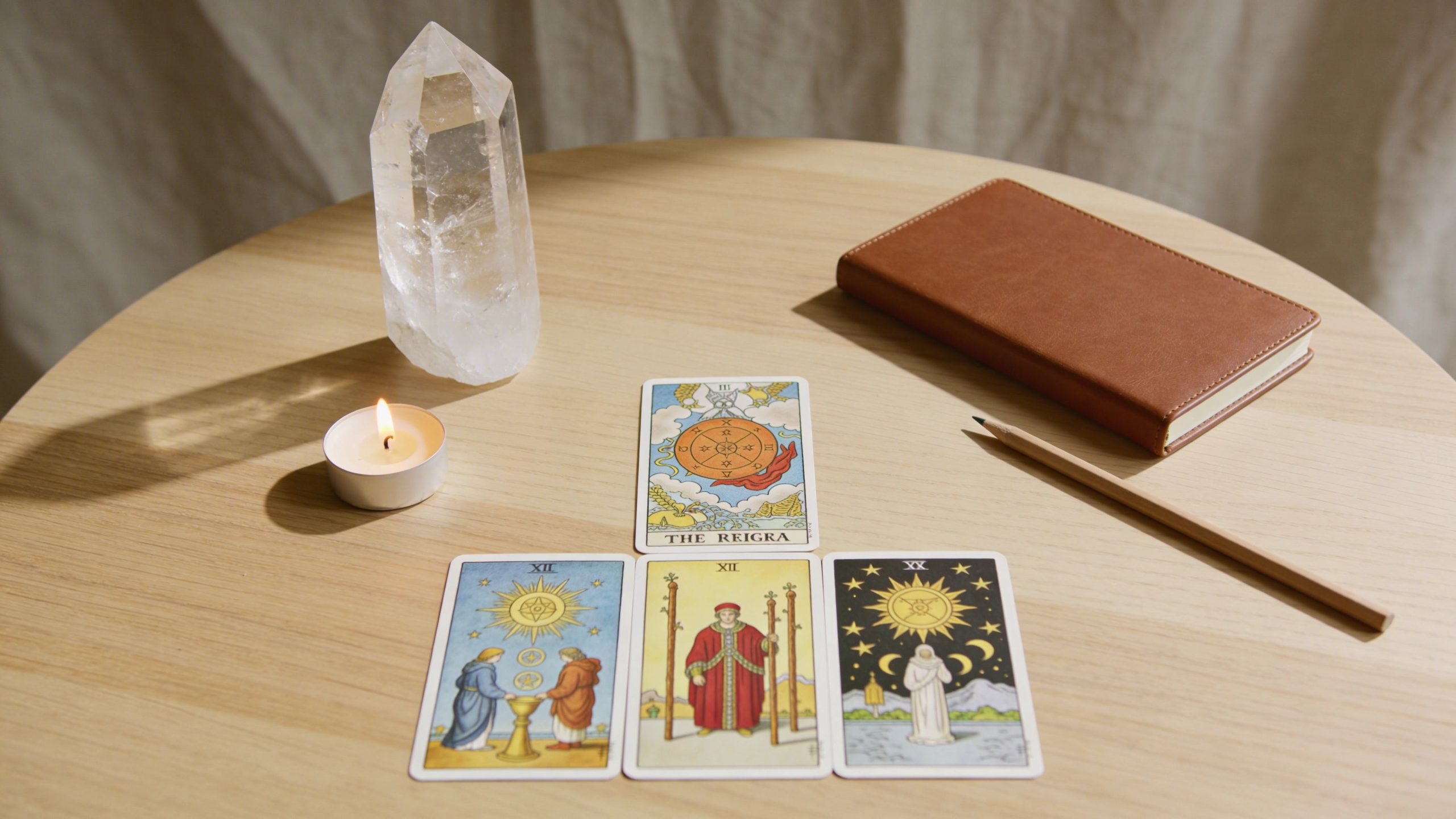
When the question is urgent, three cards are often enough.
This spread works because it forces precision. If your question is vague, the reading gets mushy. If your positions are clear, the answer usually sharpens fast.
Best uses for love and career
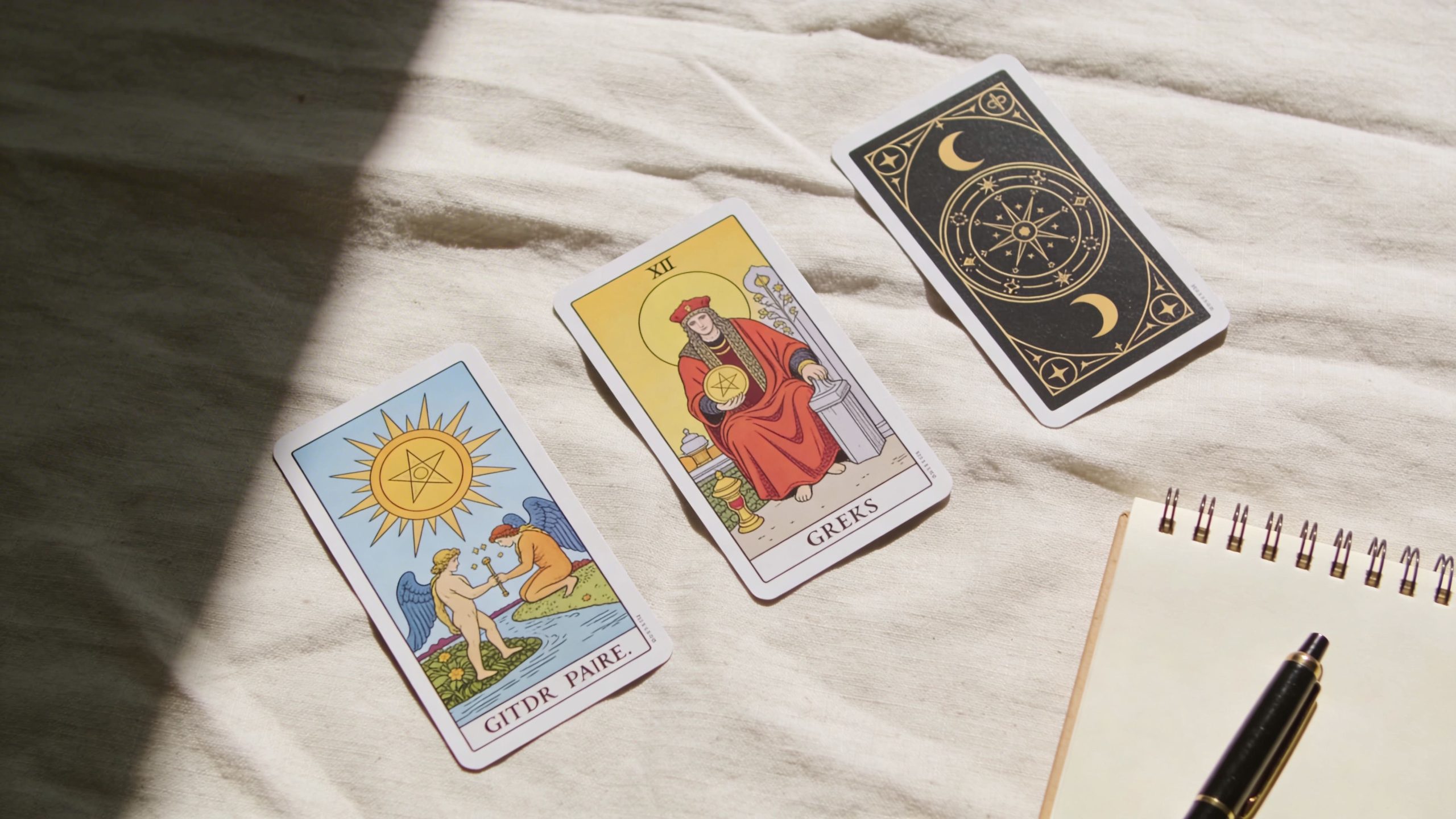
For love, assign the cards as You, Them, Relationship Potential. That works well when you’re asking whether to keep investing in someone, whether to define the relationship, or whether mixed signals mean caution.
For career, use Current Situation, Challenge, Best Next Step. That’s strong for job offers, internal promotions, difficult managers, and side-hustle questions.
A few practical setups:
- New relationship check-in: Card 1 shows your energy, Card 2 shows their energy, Card 3 shows the path if things continue as they are.
- Job offer decision: Card 1 reflects your current role, Card 2 reflects the new offer, Card 3 reflects the likely result of saying yes.
- Personal choice: Card 1 names the current situation, Card 2 shows the action that changes it, Card 3 shows where that action leads.
How to read combinations without overcomplicating them
Three-card readings are easy to misuse. People often read each card separately and miss the sentence they form together.
If you pull The Lovers with Two of Cups, the reading usually intensifies around emotional alignment, mutual choice, or sincere connection. If The Lovers appears with Seven of Swords, the issue shifts. Attraction may be real, but honesty becomes the key decision point.
In career readings, The Emperor with Eight of Pentacles usually points toward discipline, structure, and earned advancement. The Emperor with Five of Wands can show power struggles, office politics, or a boss who creates friction instead of direction.
Practical rule: Don’t ask the cards to answer three different questions in a three-card spread. Ask one question and let the positions narrow it.
If the final card feels too broad, pull one clarifier. No more than that. Once you keep drawing to force certainty, the reading stops helping.
2. The Path and Its Obstacles. The Five-Card Spread
Which matters more in a hard choice: the option itself, or the friction that keeps pulling you off course?
The five-card spread is the layout I use when a three-card reading feels too thin, but a larger spread would bury the decision in extra detail. It works well for practical dilemmas because it shows the pressure points around the choice, not just the choice on paper.
A useful structure is:
- Current situation
- What supports you
- What blocks you
- Advice
- Likely outcome if advice is followed
This spread earns its place in relationship and career readings because those decisions rarely hinge on one feeling or one fact. A relationship question may involve desire, fear, loyalty, timing, and shared values at once. A job decision may involve pay, growth, burnout, status, and the kind of life the role creates outside work.
That middle pair usually carries the reading. Support shows what is working in your favor. Obstacle shows the cost, pattern, or blind spot that keeps repeating.
If someone asks whether to leave a relationship, Card 3 often reveals whether the core issue is incompatibility, dependency, mixed signals, or avoidance. Those are very different problems, and they do not call for the same decision.
If someone asks whether to accept a new job, Card 2 tells you what the offer strengthens. Pentacles often point to money, stability, or long-term value. Wands can show challenge, ambition, and room to build. Cups may suggest a healthier culture or emotional relief. Swords often bring strategy, clarity, or intellectual stretch, but they can also warn that the role asks for constant mental vigilance.
For readers who want a familiar layout to adapt, this 5-card tarot spread past present future reading can be repurposed for decision work by assigning each position before you shuffle.
How to read combinations that affect the decision
Do not read all five cards as isolated messages. Read them as a chain of cause and effect.
In a love reading, The Devil in the obstacle position with Two of Cups often points to real connection tangled up with unhealthy attachment. The relationship may be sincere, but sincerity does not cancel control, obsession, or fear of separation.
In a career reading, Eight of Pentacles with The Star usually supports steady effort toward work that has meaning and direction. Put Eight of Pentacles next to Ten of Wands, and the same dedication starts to look like overwork, poor boundaries, or a role that rewards output more than judgment.
Advice has to fit the obstacle. If the obstacle is Two of Swords, advice that calls for decisive action makes sense. If the obstacle is Five of Pentacles, the reading may be less about boldness and more about resourcing, support, or admitting that pride is keeping you under strain.
The obstacle card shows what gets more expensive if you keep avoiding it.
That is what makes this spread useful for decision-making. It helps separate the attractive option from the workable one.
3. The Deep Dive. The Celtic Cross Spread
Use the Celtic Cross when the decision affects your life structure, not just your schedule.
Marriage, divorce, relocation, a major career pivot, going back to school, leaving a family business. Those are Celtic Cross questions. This spread is often heavier than necessary for everyday choices, but when the issue has layers, the extra detail helps.
What it reveals that smaller spreads miss
The strength of the Celtic Cross is context. It doesn’t just show the choice. It shows what’s under it, what’s fading, what’s entering, and what you’re carrying into the decision.
In love readings, this spread often separates “I love them” from “This relationship can hold real life.” Those aren’t always the same thing. A reading can show strong emotional bonds while also showing weak long-term structure, family pressure, avoidance, or incompatible values.
In career readings, the hidden factors card is often the one to watch. People ask whether they should leave a job, but the hidden factor reveals that they’re really asking whether they trust themselves to grow beyond the identity they built there.
How to interpret combination clusters
The central pair matters most. If you get The Chariot crossed by Two of Swords, the reading often points to momentum blocked by indecision. You can move, but not while pretending both options fit equally.
If you get Ten of Pentacles with The Tower in a relationship decision, don’t reduce it to doom. Sometimes that pair shows a stable-looking structure cracking because it was built on obligation, not truth. In another reading, it can show a family system disrupting a couple’s future.
A cluster of Swords near Cups often shows the mind overpowering the heart. A cluster of Pentacles with Major Arcana often shows a materially important decision with long-term consequences.
One caution. Don’t use the Celtic Cross because you feel anxious and want “more information.” That’s usually the wrong reason. Use it when the question is large enough to deserve ten positions.
4. The Quick Answer. A Yes/No Spread
Sometimes the right spread is the fast one.
A Yes/No spread won’t replace a deeper reading, but it’s useful when the issue is immediate. Should you send the message? Is tonight the right time to raise the issue? Is this job worth pursuing further? That kind of question benefits from a clean frame.
What works and what doesn’t
This spread works only when the question is closed and specific.
Good question: “Should I follow up on this interview this week?”
Weak question: “Will my career work out?”
With one card, many readers treat upright energy as yes and blocked or resistant energy as no. With three cards, you can read the pattern instead. More open, active, or supportive cards lean yes. More restrictive, concealed, or unstable cards lean no or not yet.
A practical place to try this format is the Yes No Tarot reading at Lotus Tarot Reading, especially when you need a quick decision and don’t want to overread the situation.
Ambiguous cards and combination logic
The Moon is the classic example. It usually isn’t a clean yes. It often means the facts aren’t settled, your emotions are muddying the choice, or someone isn’t showing their full hand.
Judgement is different. It often signals a clear call, but the call may be uncomfortable. That’s a yes with accountability attached.
If you pull Ace of Cups with The Sun for a love question, the answer leans warmly positive. If you pull Ace of Cups with Seven of Cups, there may be real feeling mixed with fantasy, projection, or too many possibilities to trust the moment.
In career matters, Three of Pentacles with The Magician is usually encouraging. Three of Pentacles with Seven of Swords needs more caution. Skill may be present, but politics or hidden agendas may distort the opportunity.
If the answer is unclear, accept that. “Not yet visible” is still an answer.
A yes/no spread is strongest when you use it once, act on it, and then let life respond.
5. The Inner World. The Shadow Work Spread
Some decisions stay unresolved because the outer options aren’t the core problem.
You say you’re choosing between two people, but the cards show fear of intimacy. You say you’re deciding whether to quit your job, but the deeper issue is shame about starting over. Shadow work proves its value here.
A layout that exposes repeating patterns
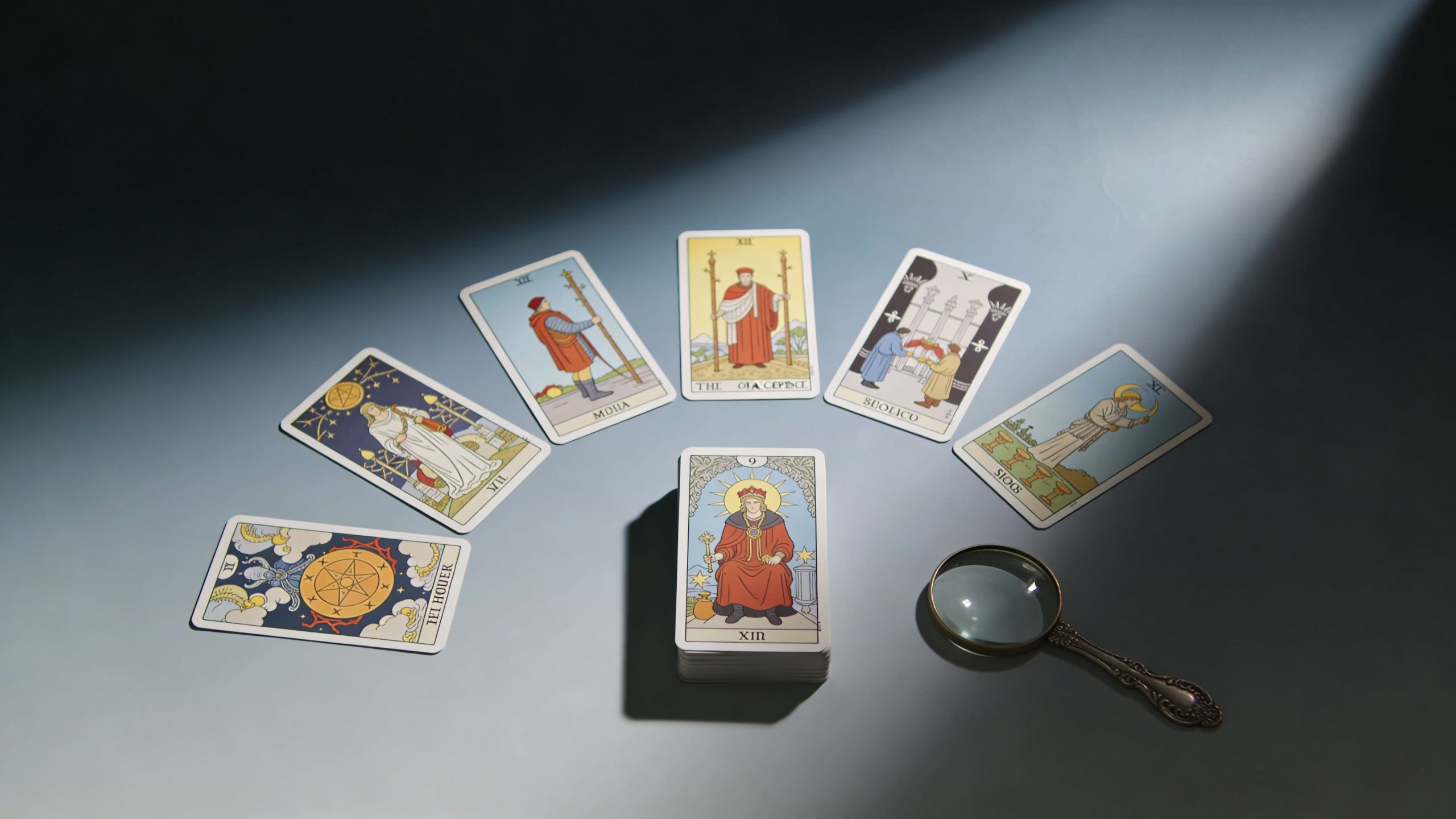
A six-card structure works well:
- What I know: Your conscious understanding of the issue.
- What I don’t see: The hidden factor, bias, or denial.
- My fear: What you’re trying to avoid.
- My desire: What you want underneath the noise.
- What I must accept: The truth that won’t bend to preference.
- Recommended action: The next grounded step.
This spread is especially useful in love when someone keeps attracting the same dynamic. Maybe the cards show a desire for partnership, but also a fear of being fully seen. In career readings, it often reveals whether your “practical concern” is fear of failure, fear of success, or loyalty to an outdated identity.
Strong pairings that often matter here
The Moon with Eight of Swords usually points to confusion reinforced by self-limiting stories. The Moon with High Priestess is different. There, the issue may be less about confusion and more about refusing to trust what you already know.
If The Devil appears with Six of Cups in relationship shadow work, I look closely at old attachment patterns. Nostalgia can become a trap when it keeps you loyal to what’s familiar instead of what’s healthy.
In career questions, Five of Pentacles with The Emperor can show a wound around authority, achievement, or not feeling legitimate enough to claim a stronger role. Pair that with Page of Pentacles, and the advice often becomes humble but concrete. Learn, apply, rebuild confidence through action.
This spread won’t flatter you. That’s why it helps.
6. The Two Paths. The Decision Diamond Spread
When the choice is clearly either-or, stop using spreads that blur the options together.
The Decision Diamond is simple and sharp. One card for Option A, one for Option B, one card above them for key advice, and one below for the underlying truth. It doesn’t pretend both paths are the same. It compares them.
Best for side-by-side choices
This spread fits decisions like these:
- Love: Stay and repair, or leave and heal
- Career: Job A or Job B
- Lifestyle: Move cities, or stay where you are
- Personal growth: Keep the safe plan, or take the creative risk
Practitioner-designed seven-card spreads for two-option decisions became more standardized in the mid-2010s. One example, the Two Options Spread, uses a central issue card and three cards per option to compare likely developments, as described in the Life-Plan Blog guide to decision-making with tarot. I like the four-card diamond when the question is already distilled and doesn’t need a wider map.
How to compare cards fairly
Don’t assign “good” to one side before you turn the cards over. That sounds obvious, but people do it constantly.
If Option A gets Ten of Pentacles and Option B gets Fool, don’t assume one is mature and one is reckless. In a career reading, Ten of Pentacles may signal stability, legacy, and long-term security. Fool may signal freedom, originality, and a needed leap. The better card depends on the life you’re trying to build.
In a love decision, Two of Cups for one path and Hermit for the other doesn’t automatically mean “choose the relationship.” Hermit can be the wiser card if the foundation card shows burnout, codependency, or the need to reconnect with yourself.
The bottom card often tells the whole truth. If it’s Justice, the decision may be about alignment and consequences. If it’s Four of Pentacles, the core issue may be fear of loss. If it’s Death, one chapter is already ending whether you approve or not.
This spread is excellent for practical people because it respects comparison without pretending tarot is a spreadsheet.
7. The Full Journey. The Horseshoe Spread
The Horseshoe is one of the most balanced decision layouts because it tells a story without flooding you.
It usually tracks the past, present, hidden influences, obstacles, other people’s attitudes, best action, and likely outcome. That makes it especially useful when your decision involves another person, a workplace, or family pressure.
Why this spread works so well in love and career
In relationship readings, the “attitudes of others” position is often revealing. It can show how a partner sees the situation, how family energy is shaping the decision, or how social pressure is clouding your instincts.
In career readings, that same position can reflect a manager’s expectations, a team’s resistance, or whether other people already see you as ready for more responsibility even if you don’t.
A seven-card structure also has a nice practical rhythm. It’s broad enough to compare influences, but still readable in one sitting. If you want to explore a version of this layout online, the 5-card horseshoe tarot spread offers a simpler related format that many readers use as a decision tool.
Combination reading in a moving narrative
The key with the Horseshoe is flow. You’re not reading isolated cards. You’re reading movement.
If the hidden influence is Three of Swords and the best action is Strength, the spread often says the wound is still active, but you don’t need drama to handle it. You need steadiness. If the obstacle is Seven of Cups and the outcome is Two of Wands, the reading may be asking you to narrow scattered possibilities into one intentional direction.
If Cups dominate the first half and Pentacles dominate the second, the story often moves from emotion into real-world implementation. If Swords keep appearing near the “others” position, outside opinions may be too loud.
One useful detail from practitioner tradition is that seven-card choice layouts have become a common way to map pros, cons, and outcomes around two paths. The logic is straightforward, and it’s one reason these spreads remain popular for real-life crossroads.
Decision-Making Tarot: 7-Spread Comparison
| Spread | Implementation complexity | Resource requirements | Expected outcomes | Ideal use cases | Key advantages |
|---|---|---|---|---|---|
| 1. The Crossroads: Three-Card Spread | Very low, beginner friendly | Minimal (3 cards, quick time) | Quick, focused guidance; limited depth | Quick decisions, daily clarity, love/career checks | Fast, adaptable, easy to interpret |
| 2. The Path and Its Obstacles: Five-Card Spread | Low–moderate, some experience helpful | Moderate (5 cards, moderate time) | Deeper insight into obstacles and actions | Complex decisions, career planning, relationship evaluation | Balances depth and speed; highlights obstacles & advice |
| 3. The Deep Dive: Celtic Cross | High, steep learning curve | Significant (10 cards, time, practice) | Comprehensive, nuanced analysis with timeline | Major life decisions, in-depth readings, long-term planning | Most thorough; reveals hidden factors and timeline |
| 4. The Quick Answer: Yes/No Spread | Very low, instant use | Minimal (1–3 cards) | Binary immediate answer; low nuance | Time-sensitive, simple yes/no queries | Fastest, straightforward, mobile-friendly |
| 5. The Inner World: Shadow Work Spread | Moderate–high, introspective skill needed | Moderate (6 cards, journaling, reflection) | Self-awareness; uncovers patterns and fears (less predictive) | Personal growth, recurring patterns, therapy-adjacent work | Reveals unconscious drivers; therapeutic insight |
| 6. The Two Paths: Decision Diamond Spread | Low–moderate, structured comparison | Low (4 cards) | Clear comparative clarity between two options | Either/or choices (job offers, stay vs. leave, location) | Balanced side-by-side comparison; concise depth |
| 7. The Full Journey: Horseshoe Spread | Moderate, accessible narrative reading | Moderate (7 cards, moderate time) | Story-like journey; includes external attitudes and outcome | Relationship/career decisions needing outside perspective | Intuitive narrative flow; reveals attitudes of others |
From Insight to Action. Making Your Informed Choice
A tarot spread for decision making won’t live your life for you. It won’t sign the lease, end the relationship, accept the offer, or say the difficult thing. What it can do is strip away some of the fog.
That’s its primary value. Tarot shows where your emotions are tangled with your logic, where wishful thinking is distorting your view, and where a choice already has momentum even before you act. Once you see that clearly, your agency comes back into the room.
Different spreads do different jobs. A three-card spread is excellent when you need a fast read on the energy of a relationship or opportunity. A five-card spread is better when you know there’s a block but can’t name it. The Celtic Cross earns its place when the decision will reshape your life. A yes/no spread helps with timing. Shadow work helps when the same lesson keeps repeating. The Decision Diamond compares clean alternatives. The Horseshoe shows the whole arc, including the influence of other people.
Use the smallest spread that can adequately hold the question. That’s one of the most practical rules I know. People often reach for a larger spread because they feel anxious, not because the question needs it. Bigger isn’t always better. Sometimes ten cards only create more ways to avoid the truth that three cards already showed.
Card combinations matter just as much as card meanings. The Lovers beside Seven of Swords reads differently than The Lovers beside Two of Cups. The Emperor beside Eight of Pentacles reads differently than The Emperor beside Five of Wands. A strong reading doesn’t come from memorizing keywords. It comes from noticing how the cards change each other.
Keep your questions specific. Journal what you pulled. Revisit the reading after you’ve acted. That’s how you build trust in your practice. Over time, you’ll notice which spreads reveal your blind spots, which cards repeat when you ignore your instincts, and which combinations always signal a need for caution.
If you want a simple place to practice, Lotus Tarot Reading offers on-demand spreads for quick pulls and multi-card readings. Start small. Ask one real question. Let the cards show you what your mind has been trying not to say.
If you want to explore a tarot spread for decision making on your own time, Lotus Tarot Reading offers free online options for yes/no questions, relationship concerns, career choices, and multi-card layouts that let you compare paths and reflect before you act.