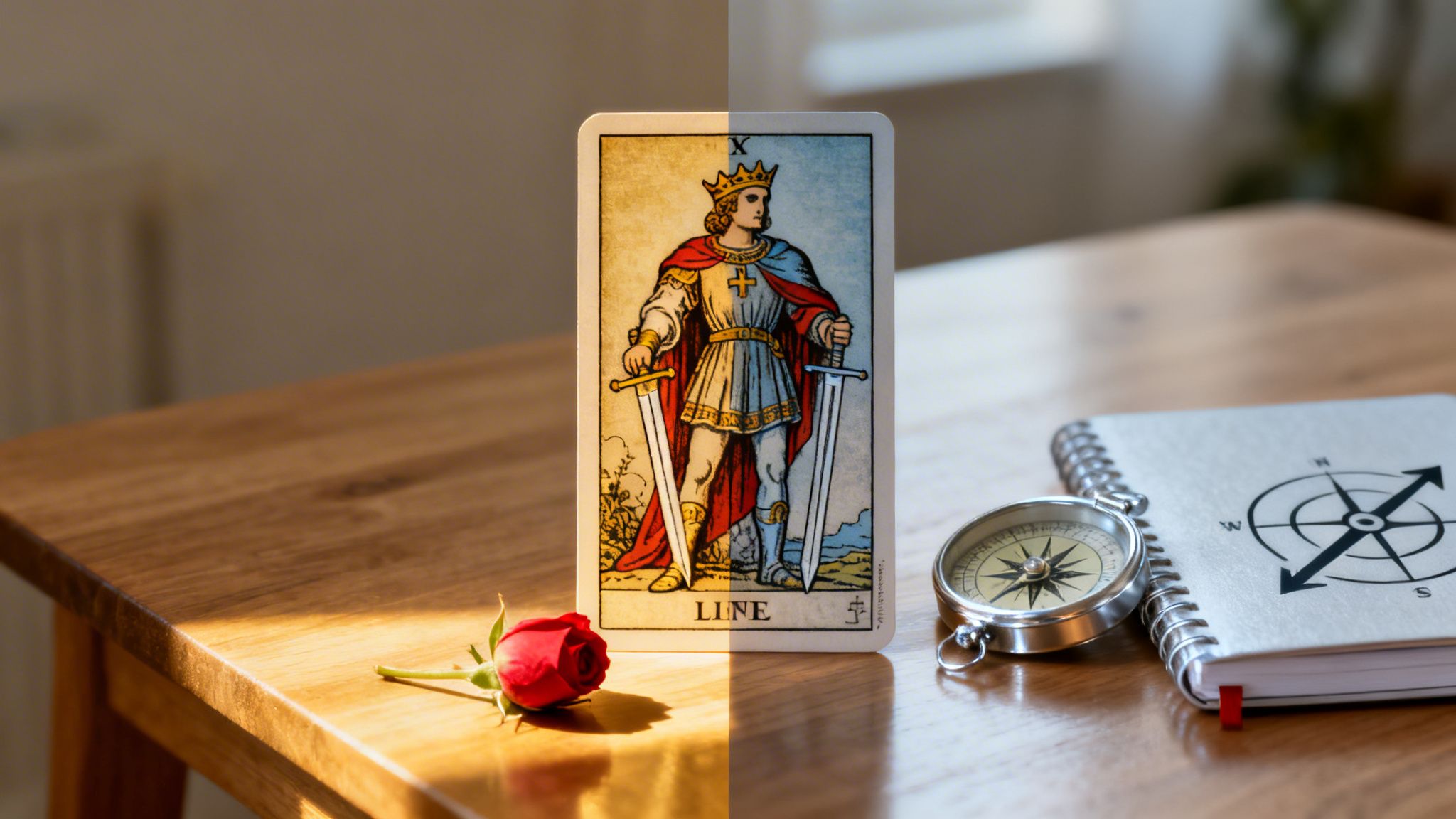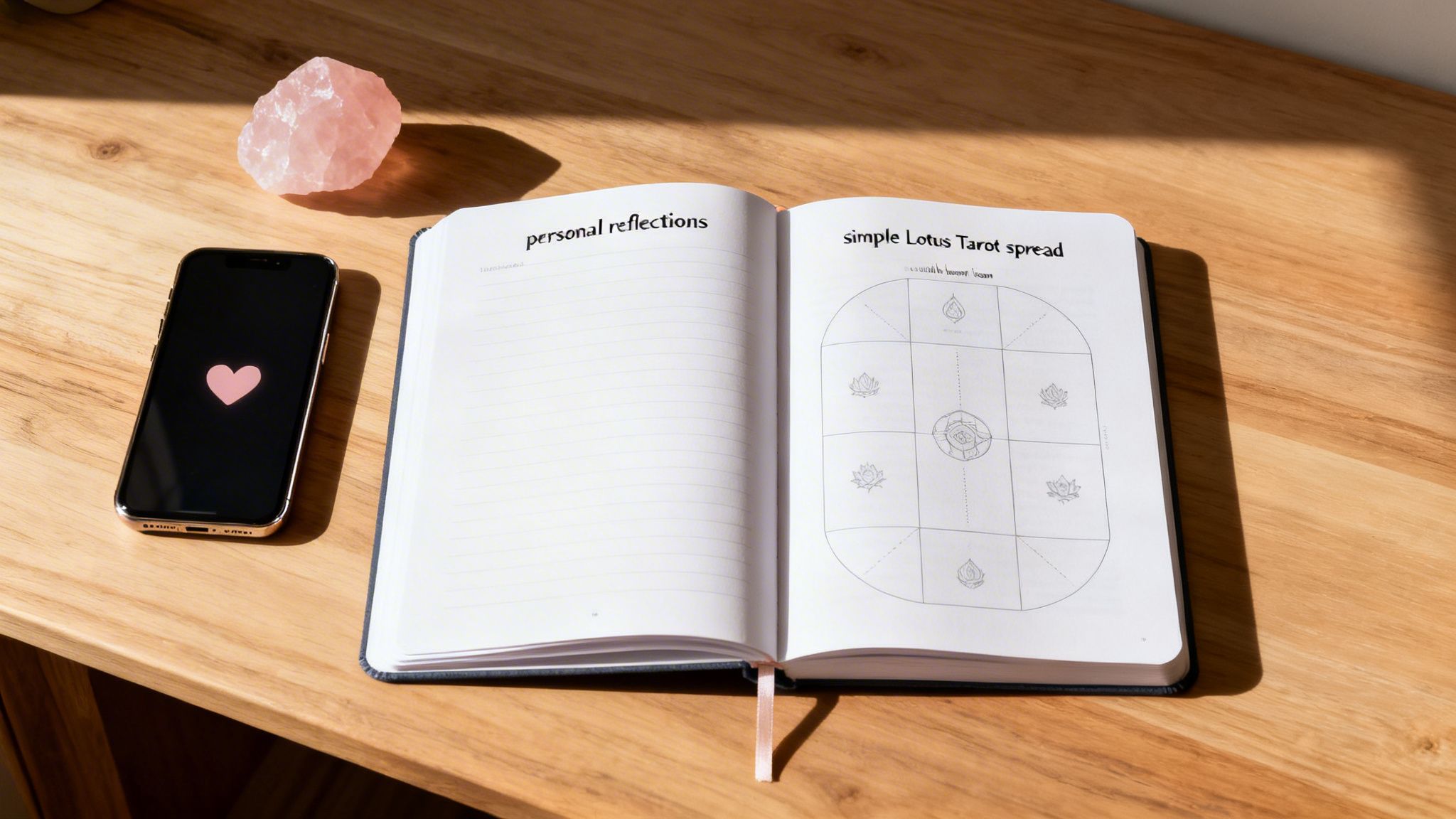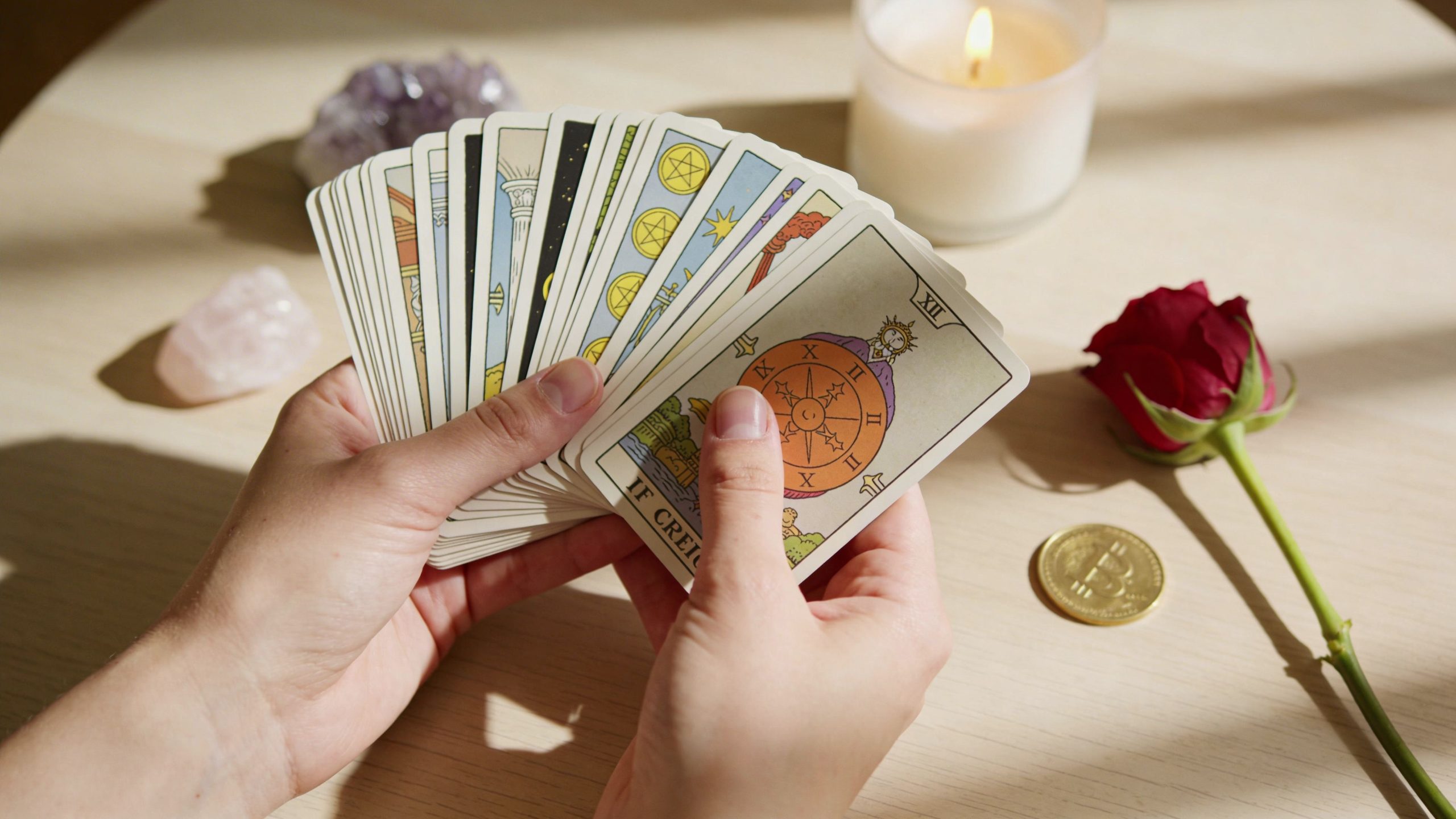
A lot of people learn tarot at the exact moment they need answers. A relationship feels uncertain. A career move looks promising but risky. A text goes unanswered, or a job interview leaves you replaying every detail. You pick up a deck hoping the cards will tell you what happens next.
That impulse is understandable, but it helps to start somewhere more grounded. Tarot works best when you use it to read the shape of a situation, your role inside it, and the patterns you may be missing. That is how the cards become useful for love, work, and those questions that keep circling in your head at night.
Most beginner guides teach tarot as a stack of definitions. Learn the card meanings. Memorize the keywords. Match them to a spread. That method gets you only so far. Reading starts when you notice how one card changes another. A single card can suggest attraction, hesitation, ambition, grief, or timing. Two or three cards together can show a relationship dynamic, a workplace power struggle, or the difference between desire and reality.
Your Tarot Journey Begins Here
If you are holding a tarot deck and feeling both curious and slightly intimidated, that is normal. Many people start with the same thought. How am I supposed to learn 78 cards and somehow turn them into insight about love, career, or the future?
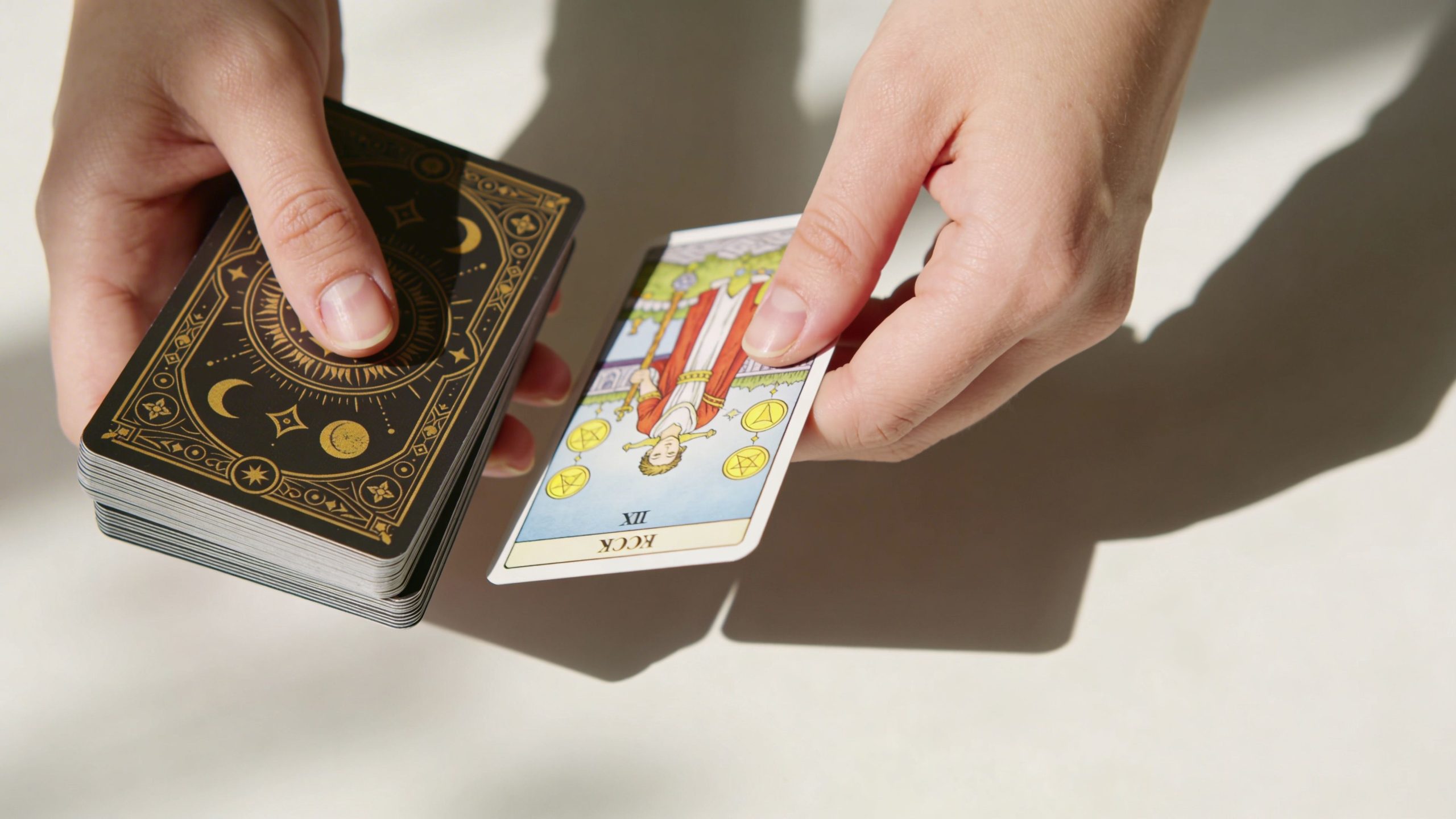
The good news is that learning how to read tarot cards does not begin with memorizing every possible meaning. It begins with learning to notice tone, tension, and movement. Tarot is less like studying flash cards and more like listening to a conversation.
Why your reading is never generic
A standard tarot deck contains 78 cards. In a 10-card Celtic Cross spread, the number of possible combinations is approximately 1.17 trillion, which is why two people receiving the exact same spread in the exact same positions is astronomically unlikely, according to The Maths of Tarot.
That matters because it explains something readers sense quickly. A spread is not just a random pile of meanings. It is a unique arrangement that asks for interpretation, not recitation.
When someone asks, “Will this relationship last?” the answer is rarely sitting inside one card alone. The answer lives in the interaction between cards that show emotional truth, fear, timing, desire, resistance, and outside pressure. The same is true in career readings. A promising opportunity can sit next to burnout, poor leadership, or a need for patience.
Key takeaway: Tarot becomes clearer when you stop asking, “What does this card mean by itself?” and start asking, “What story are these cards telling together?”
A practical way to think about tarot
Use the deck as a mirror, not a script. The cards do not replace your judgment. They sharpen it.
That is why this guide stays focused on the questions people bring to tarot:
- Love questions about commitment, mixed signals, breakups, reconciliation, and emotional readiness
- Career questions about job searches, promotions, burnout, office dynamics, and next steps
- Life direction questions about timing, self-trust, and choosing between two paths
The skill that changes everything is narrative reading. Once you can hear the dialogue between cards, the deck stops feeling mysterious and starts feeling readable.
Creating the Right Space for Clear Answers
A muddy question produces a muddy reading. Most reading problems start before the first card is turned over.
If your mind is scattered, your question is loaded, or you rush through the shuffle because you want quick reassurance, the reading usually reflects that confusion back to you. Clean readings come from clean setup.
Prepare yourself before you touch the deck
You do not need candles, incense, or a special altar. You need focus.
Take a minute to breathe. Inhale through your nose, exhale through your mouth, and let the surface noise settle. If your emotions are running high, name that before you begin. “I am anxious about this relationship.” “I want this job badly.” “I already know what answer I hope to get.” That honesty helps.
Some readers like to knock on the deck, shuffle until the cards feel ready, or visualize clearing away old energy. Any simple ritual is fine if it helps you become attentive rather than theatrical.
Ask a question tarot can answer
Closed questions often lead to cramped readings.
“Will he text me?”
“Will I get the job?”
“Is this my soulmate?”
Tarot can respond to those, but it often gives richer guidance when you open the frame. Better questions invite a fuller story.
Try these instead:
- For love: What do I need to understand about this connection right now?
- For relationships: What pattern am I repeating in love?
- For reconciliation: What energy surrounds reconnecting with this person?
- For career: What should I know before accepting this role?
- For job search: What energy should I bring to my search this week?
- For work conflict: What is the core issue in this professional situation?
A strong tarot question does three things:
- It focuses on a real situation.
- It leaves room for complexity.
- It invites insight, not just reassurance.
Practical tip: If your question can be answered with a single word, widen it. Tarot reads situations better than it reads ultimatums.
Shuffle with intention
Shuffling matters because it gives your attention somewhere to go. While shuffling, keep the question in mind. If another person is receiving the reading, have them handle the deck if possible.
A professional reading method places importance on preparation. One key step is having the querent cut the deck while focusing on the question, which helps engage their subconscious and keep the reading relevant. The same guide notes anecdotal evidence that 90% of reader errors stem from poor preparation, as explained in this step-by-step tarot reading guide.
That tracks with experience. The problem is rarely that the cards “didn’t work.” The problem is usually that the question was vague, the reader was rushed, or the interpretation started from panic.
Keep your setup simple
You only need a few things:
- A deck you can read comfortably
- A quiet surface
- A notebook or notes app
- A clear question
- Enough time to think after the cards appear
If you treat tarot like a slot machine, it will feel noisy. If you treat it like a conversation, it becomes far more precise.
Meet the Characters Your Tarot Deck
A tarot deck is structured, not chaotic. Once you understand the parts, reading becomes easier and much more intuitive.
The first split to learn is Major Arcana versus Minor Arcana. That division tells you whether a reading is speaking about a major life lesson or a more ordinary day-to-day matter.
Major Arcana and Minor Arcana
In a 78-card deck, Major Arcana cards have a 28.2% chance of appearing and often point to bigger life themes, while Minor Arcana make up 71.8% and tend to reflect everyday situations, according to this tarot statistics analysis.
In practice, that means this:
- If a love reading contains several Major Arcana, the relationship may be changing you at a deep level.
- If a career spread is mostly Minor Arcana, the issue may be practical. Workload, communication, money, timing, team culture.
- If one Major Arcana appears among several Minors, pay close attention to it. It often names the central lesson inside an ordinary-looking situation.
Think of the Major Arcana as the headline. Think of the Minor Arcana as the scenes, details, and conversations.
The Major Arcana as life-changing forces
The 22 Major Arcana cards describe archetypal experiences. New beginnings. Choice. disruption. surrender. healing. completion.
You do not need to memorize a formal essay for each one. Start by recognizing their role.
A few examples:
- The Fool often points to a leap, innocence, risk, or trust
- The Lovers can indicate union, attraction, or a meaningful choice
- The Chariot brings momentum, discipline, and directed will
- The Tower strips away what cannot stand
- The Star restores hope, faith, and healing
- The World suggests completion and integration
In love readings, Major Arcana often show that the relationship is not casual in impact, even if it looks casual on the surface. In career readings, they can signal turning points, identity shifts, or a path that changes more than your paycheck.
The Minor Arcana as daily life
The 56 Minor Arcana cards are where most practical reading happens. They show the lived texture of a situation.
Each suit has a distinct language. Once you understand the suits, you can read a lot even before you know the exact card.
The Four Tarot Suits and Their Meanings
| Suit | Element | Core Focus | Love Questions | Career Questions |
|---|---|---|---|---|
| Cups | Water | Emotions, connection, intuition | Feelings, intimacy, vulnerability, romance | Emotional fulfillment, team harmony, values |
| Pentacles | Earth | Stability, money, body, results | Commitment, security, practical effort | Job, income, promotion, long-term growth |
| Swords | Air | Thoughts, conflict, truth, decisions | Communication, doubt, tension, boundaries | Strategy, stress, contracts, workplace conflict |
| Wands | Fire | Action, drive, attraction, momentum | Chemistry, pursuit, passion, excitement | Ambition, leadership, initiative, new ventures |
How the suits show up in real readings
Cups matter when the emotional climate is the story. If you ask about someone’s feelings and get several Cups, the reading is centered on connection, desire, hurt, openness, or emotional maturity.
Pentacles are especially useful in long-term relationship readings. They show effort, reliability, consistency, and material reality. In career readings, they often speak very directly. Work, money, stability, results.
Swords are not “bad” cards. They are clear cards. They point to thought patterns, difficult truths, decisions, arguments, and pressure. In love readings, Swords often show where the issue is not lack of feeling but fear, confusion, or harsh communication.
Wands bring heat. Attraction. Initiative. Restlessness. A Wands-heavy love reading can suggest strong chemistry, but not always staying power. In work readings, Wands often appear when someone wants movement, independence, or a more exciting direction.
Reading shortcut: When one suit dominates a spread, ask what that suit cares about. A Cups spread asks how people feel. A Pentacles spread asks what is sustainable. A Swords spread asks what is true. A Wands spread asks what wants to happen next.
Do not treat every card as isolated
Many beginners stall at this point. They learn “Three of Swords means heartbreak” or “Ace of Pentacles means opportunity,” then stop there.
But a card changes depending on the company it keeps. Three of Swords beside healing cards can show recovery after pain. Ace of Pentacles beside heavy Swords can show a good opportunity clouded by stress or self-doubt.
The deck works like a cast of characters. The suits tell you the setting. The numbers show development. The court cards bring personalities or styles of behavior. The Major Arcana tell you which scenes carry real weight.
Once you see that structure, tarot starts to feel much less random.
Conducting Your First Simple Tarot Readings
Start small. One-card and three-card readings teach better habits than jumping straight into large spreads.
A simple reading forces you to notice what is in front of you. It also keeps you from overcomplicating the message when you are still learning how to read tarot cards with confidence.
The one-card draw for daily guidance
A one-card draw is useful when you want focus rather than a full analysis.
Good one-card questions include:
- What energy should I bring to my relationship today?
- What do I need to understand about this job search right now?
- Where should I place my attention this week?
- What am I missing in this situation?
Shuffle while holding the question in mind. Cut the deck. Pull one card.
Then ask these three things:
- What is the first feeling or reaction this card gives me?
- How does its suit or Arcana type shape the answer?
- What action, attitude, or awareness does it suggest?
If you pull a Pentacles card for a career question, the answer may be practical. Update the résumé. Follow up. Build consistency. If you pull a Cups card for the same question, the message may concern fulfillment, morale, or whether the role suits your values.
A one-card pull is not small because it is weak. It is small because it is concentrated.
A three-card spread that beginners can trust
The most useful beginner spread is still the classic Past, Present, Future. It works for love, career, and decision-making because it shows motion.
For a relationship question, ask something like:
What do I need to understand about my current romantic situation?
Lay three cards left to right.
- Past shows what shaped the issue
- Present shows the energy now
- Future shows where things are moving if nothing changes
A love reading example
Say you pull:
- Past: Six of Cups
- Present: Two of Swords
- Future: Knight of Cups
You do not need to panic about exact textbook meanings. Read the flow.
The Six of Cups in the past can suggest nostalgia, history, tenderness, or an old emotional bond. Maybe this relationship has roots. Maybe someone is attached to the memory of what the connection used to be.
The Two of Swords in the present suggests a pause, a stalemate, or avoidance. Someone may be protecting themselves, refusing to choose, or trying not to feel too much.
The Knight of Cups in the future brings movement through emotion. An offer, a romantic gesture, a vulnerable conversation, or someone finally expressing what they feel.
Read together, the spread tells a coherent story. A meaningful emotional history exists. Right now, someone is guarded or undecided. Soon, the energy shifts toward emotional expression.
That is a reading. Not because you memorized definitions, but because you followed the narrative.
A career reading example
Use this question:
What energy do I need to bring to my job search today?
If you pull Three of Pentacles, the card may be asking for collaboration, skill, feedback, and visible effort. It is not passive luck. It is craft.
If you want a digital place to practice that style of question, a focused career tarot reading can help you compare your own interpretation with a structured spread.
How beginners get tripped up
The main mistake is trying to force a reading to answer the question you wish you had asked.
A few examples:
- You ask about compatibility, but really want certainty
- You ask about a promotion, but really want validation
- You ask what someone feels, but really want to know if they will choose you
Tarot can reveal emotional reality, but only if you let the cards answer.
Best practice: Write the question down before you shuffle. After the reading, write one plain-language sentence that answers it. This keeps you from wandering off into unrelated meanings.
Keep your interpretations grounded
For each early reading, note:
- the question
- the cards
- your first interpretation
- what happened later
That habit builds trust in your own reading voice. It also shows you where you overread, underread, or ignored what was obvious.
Simple spreads are where readers learn discipline. They teach you to read what is there, not what you fear.
Weaving the Tarot's Story Advanced Interpretation
The biggest leap in tarot happens when you stop reading cards one by one and start reading the space between them.
That is where love and career readings become sharp. Not because you know more keywords, but because you understand interaction. Attraction beside fear. Opportunity beside avoidance. Commitment beside emotional immaturity.
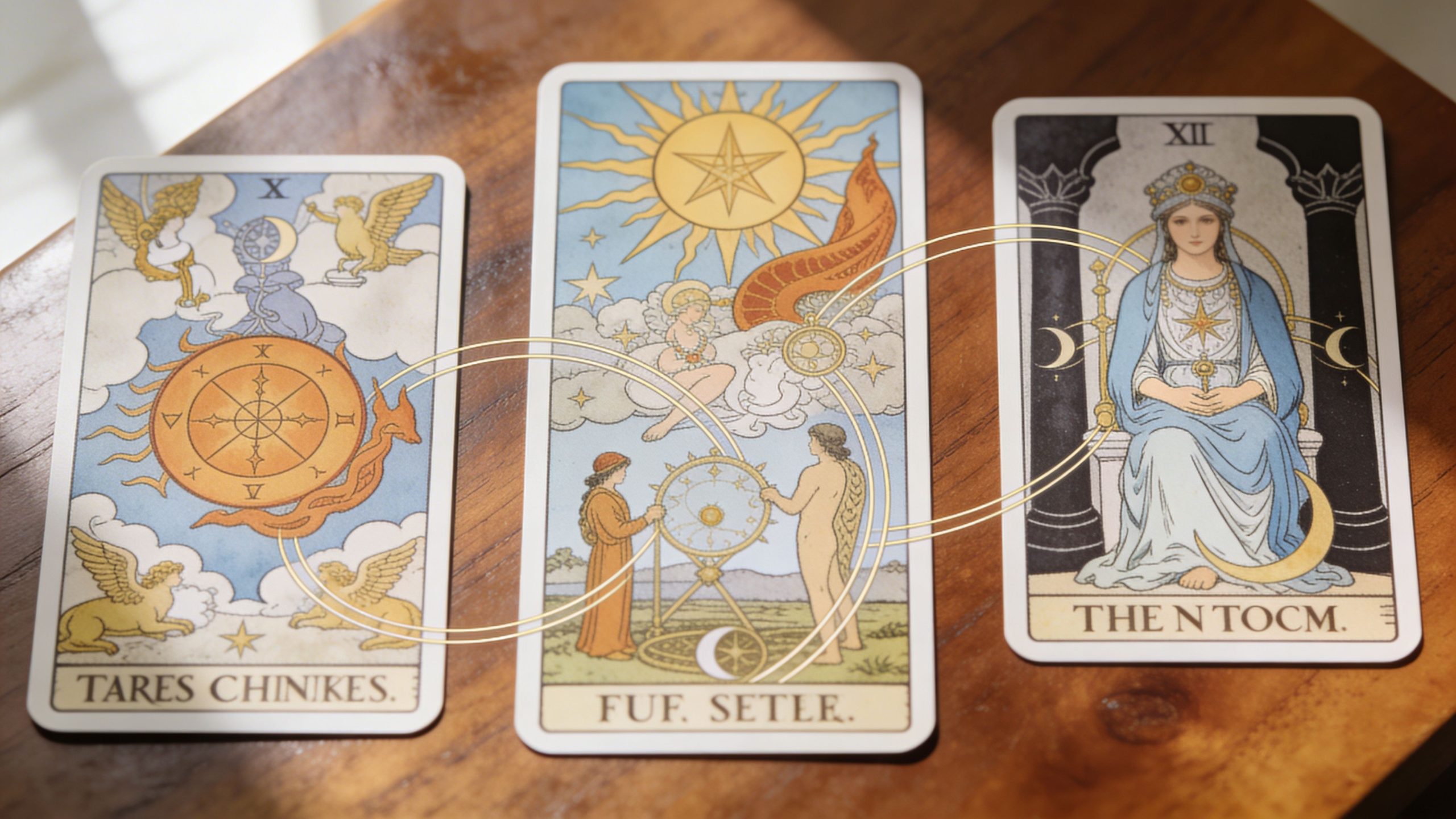
Advanced reading relies on layered interpretation rather than memorization alone. Readers build from imagery into elemental balance and narrative flow, and this blended intuition-traditional method yields over 90% relevance compared with 40% for purely memorized reading, according to this advanced tarot discussion.
Read cards as a dialogue
A card does not lose its meaning when another card appears beside it. It gets refined.
Here are a few ways to listen to the dialogue:
- A Cups card beside a Swords card often shows emotion meeting thought, vulnerability meeting defense, or feeling complicated by fear.
- A Pentacles card beside Wands can show a tension between stability and desire. Stay safe or move fast.
- A Major Arcana next to court cards often shows a personal role inside a larger life lesson.
- Repeating numbers or similar visual themes can point to emphasis. Pause there.
The question is not “What does each card mean?” The question is “How are these cards modifying each other?”
Love reading combinations that say more together
Some combinations speak loudly.
Queen of Cups with King of Pentacles
In a relationship reading, this pair often suggests emotional depth meeting steadiness. One person may lead with feeling and intuition. The other may show love through reliability, structure, or material support.
This can be a strong pairing if the relationship needs balance. It can also expose mismatch if one person wants tenderness and the other only offers practicality.
The Lovers with Two of Swords
This combination often points to a meaningful connection blocked by indecision. Feelings may be real, but someone is not ready to choose, commit, or face the consequences of desire.
Ten of Cups with Five of Wands
Here the cards can show a shared vision of happiness disrupted by friction. The bond may be worth building, but conflict styles, family pressure, or competing priorities interfere.
The Devil with Knight of Cups
This is one of those pairings that beginners often romanticize. It can show intense attraction and pursuit, but it may also point to obsession, fantasy, emotional dependency, or seductive behavior without grounded commitment.
Career reading combinations that sharpen the message
Ace of Pentacles with Eight of Swords
A real opportunity exists, but the person may feel trapped, underqualified, hesitant, or mentally boxed in. The external offer looks solid. The internal state is the obstacle.
Three of Pentacles with Emperor
This pairing often supports structured growth, teamwork, accountability, or a setting where skill is recognized. It can also indicate a workplace led by strong authority.
Eight of Wands with Four of Pentacles
Fast movement meets resistance. The job market may be moving, a decision may be approaching, but the querent or employer is holding too tightly. In practice, this often shows tension between speed and control.
Interpretation habit: When two strong cards appear together, ask whether they are cooperating, clashing, or correcting each other.
How to read reversals without fear
Reversed cards worry beginners more than they should.
A reversal does not automatically mean “bad.” It often points to one of four things:
- Blocked energy
- Internalized energy
- Delay
- Distortion or excess
For example:
- Reversed Knight of Cups in love can suggest unspoken feelings, mixed signals, immaturity, or romantic performance without consistency.
- Reversed Three of Pentacles in career can show poor collaboration, weak communication, or talent not being recognized properly.
- Reversed The Hermit may point to isolation that has gone too far, or guidance being ignored.
Read reversals as texture. They tell you where the energy is not moving cleanly.
A full example of card conversation in love
Take this five-card relationship spread:
- Queen of Cups
- The Tower
- The Star
- King of Pentacles
- Reversed Two of Cups
Start with the center of gravity. The Tower says something false or unstable cannot continue unchanged. In love, that often means a revelation, rupture, sudden honesty, or the collapse of an illusion.
Now look at the surrounding cards.
Queen of Cups shows genuine feeling, emotional sensitivity, and intuitive awareness. This person feels strongly. They may already know something is off.
The Star beside The Tower matters a lot. Destruction is not the end of the story. Healing follows truth. A painful clearing can create space for honesty, repair, or a healthier future.
King of Pentacles introduces steadiness, security, and grounded long-term energy. Someone may be capable of real commitment, but the relationship needs to move out of fantasy first.
Then comes reversed Two of Cups. That adds strain in mutuality. The bond may be misaligned, interrupted, unreciprocated for now, or unable to meet itself fully.
Read together, this spread does not merely say “breakup” or “happy ending.” It says the relationship is emotionally significant, built on shaky ground or a truth that can no longer be avoided, and healing is possible only through realism. One person may be ready for mature commitment. The connection itself is not flowing cleanly in the present.
That is what card dialogue looks like.
If you want to practice this narrative style in a relationship context, a free 5 card tarot love spread gives enough space for the cards to interact without becoming overwhelming.
Mastering the Celtic Cross and Practicing Your Skills
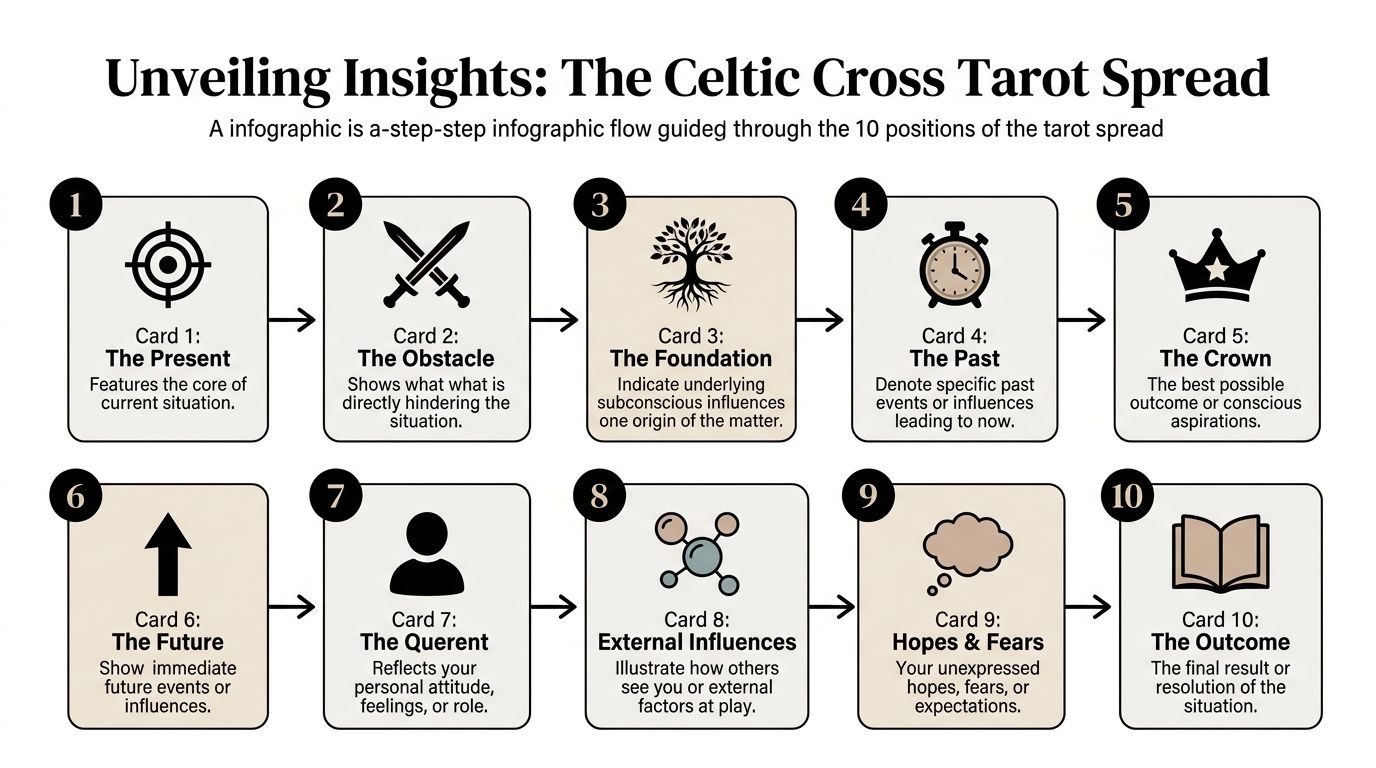
When a question has layers, the Celtic Cross is one of the most useful spreads in tarot. It works well when you are not asking for a quick message, but for a full map of the situation.
That makes it a strong choice for complicated relationship questions, career crossroads, and periods where a lot is happening at once.
What each position reveals
The power of the Celtic Cross comes from perspective. It does not just tell you what is happening. It shows what supports the issue, what crosses it, what you fear, and where the energy may lead.
The ten positions are:
- The Present. The heart of the matter.
- The Obstacle. What directly complicates it.
- The Foundation. The root or underlying cause.
- The Past. What has already shaped the current situation.
- The Crown. What you hope for, aim toward, or can potentially reach.
- The Future. What is approaching soon.
- The Querent. Your attitude, role, or state of mind.
- External Influences. Other people, pressure, environment, perception.
- Hopes and Fears. What you may not be saying out loud.
- The Outcome. The likely resolution if the current energy continues.
A relationship example makes this easier. If the present card shows emotional uncertainty, the obstacle may reveal poor communication, the foundation may show an older wound, and the hopes-and-fears position may expose how much the querent wants closeness while fearing rejection.
In career readings, the same spread can separate the practical issue from the emotional one. A person may think the question is “Should I leave this job?” while the cards reveal the deeper issue is burnout, lack of recognition, or fear of starting over.
Use media to study the spread visually
A visual walkthrough helps many readers lock in the layout before they begin working with it.
Practice in a way that builds skill
Do not wait until you feel fully ready. Read regularly and review your interpretations later.
Useful practice habits include:
- Repeat one spread for a week instead of changing layouts constantly
- Ask grounded questions tied to real choices and relationships
- Journal the narrative, not just the card names
- Notice what you projected onto the spread afterward
- Compare simple and complex spreads on the same issue
For hands-on practice with this layout, a digital 10-card tarot spread can be useful when you want to focus on interpretation rather than card handling.
Common beginner mistakes with the Celtic Cross
- Forcing a desired outcome: reading every hopeful card as proof that things will go your way
- Ignoring the obstacle card: treating it as a side note when it often explains the entire problem
- Overreading the outcome: forgetting it reflects current direction, not a fixed destiny
- Skipping position meaning: reading ten cards in isolation instead of through their assigned roles
Best way to improve: After finishing a Celtic Cross, summarize the spread in five plain sentences. If you cannot do that, the reading is still too scattered.
Your Path to Intuitive Clarity
Tarot gets easier when you stop trying to sound like a textbook and start listening for the living pattern in the cards. That is the fundamental shift. You move from memorizing meanings to reading dynamics.
Love readings become clearer when you can tell the difference between attraction and commitment, hope and projection, tenderness and avoidance. Career readings become more useful when you can see whether the issue is timing, confidence, leadership, money, or exhaustion. The deck can show all of that, but only if you read the cards in relationship to each other.
Keep your practice steady. Ask better questions. Write your readings down. Let your interpretation be specific, simple, and honest.
If you like surrounding your reading space with visual reminders of instinct and reflection, the Intuition Sketch Art Print suits that mood well without turning the practice into performance.
The cards do not ask you to be perfect. They ask you to pay attention. That is enough to begin.
If you want a place to practice what you’ve learned, Lotus Tarot Reading offers free on-demand spreads for love, career, yes-or-no questions, and deeper multi-card layouts, so you can build confidence by reading regularly and comparing how different spreads frame the same situation.